

Make / Model Search
OptionsCar reviews - Volvo - XC90 - T8Volvo modelsOverviewWe like Family-perfect size, seven seats, great safety list, fantastic economy, solid handling, top-shelf features Room for improvement Not cheap, vague steering and brake feel, touchscreen functions can be buried, no spare wheel Volvo’s hybrid wagon is so good it proves why buyers are shunning EVs2 Dec 2025 Overview
SLOW uptake of electric vehicles has made Volvo pause its electric advance with Australian buyers becoming the beneficiaries of retaining a big wagon to breeze through long country distances.
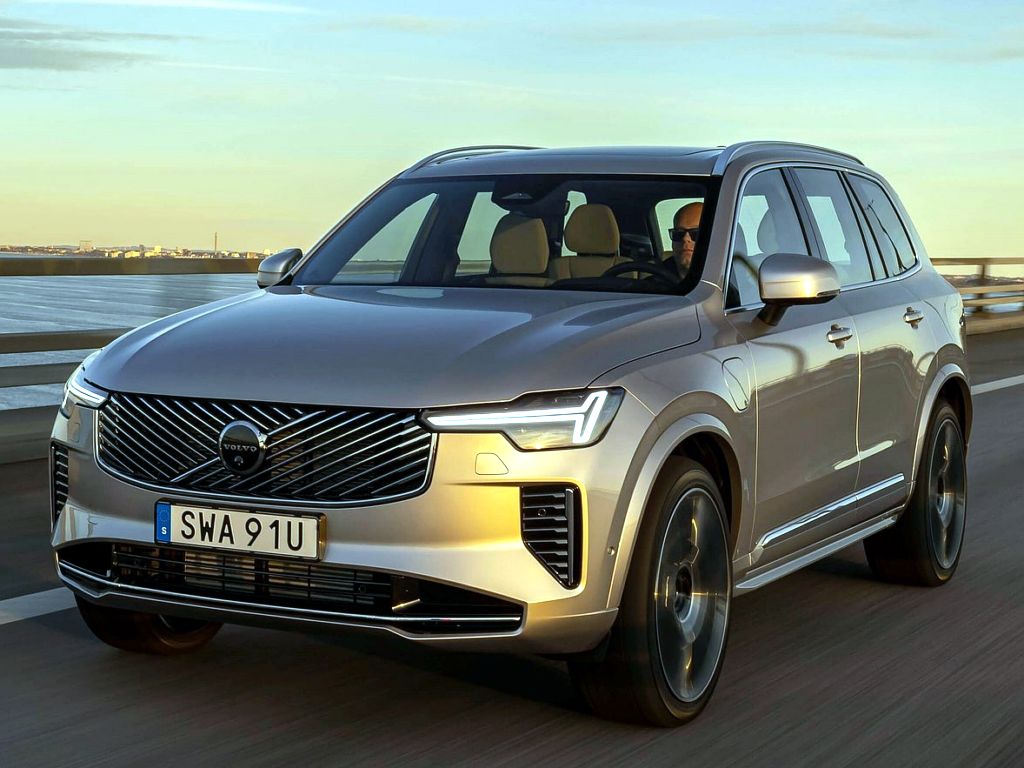
The XC90 T8 – the top-shelf 90 model with a plug-in hybrid powertrain showcases all the things you used to love about Volvo – heaps of room, superb safety inventory, hushed and limousine-style ride and comfort levels, and a miserly fuel consumption that’ll crack 1100km range.
So why bother with an EV? The T8 comes in two guises – the Plus T8 at $120,990 (plus costs) and the more lavish Ultra T8 at $130,990 plus costs. Tested is the Ultra T8.
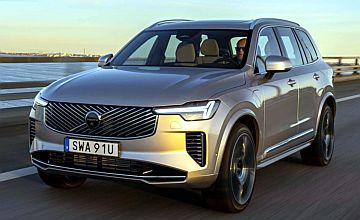
The XC90 borrows the boxy style and practicality of its EX90 electric sibling and takes a bow at its 1970s 245 wagon ancestor. Like the 245, the latest petrol/hybrid XC90 hints at a long life of desirability and a subsequent healthy resale value.
In an era when you may have thought the wagon was a dying breed, the XC90 proves that its days aren’t quite over – even if Volvo pretends for marketing purposes that this latest wagon is an SUV.
The XC90 comes only as an all-wheel drive and like the other three versions, uses a base 2.0-litre engine and boosts its performance by applying various technologies.
If you didn’t want all the trim (and want to save up to $33,000) then the entry-level XC90 non-hybrid Plus B5 is more than adequate.
For those seeking a bit more of a charge, the pair of PHEVs is the way to go.
Driving Impressions
The simplicity of the car’s exterior extends within, opening a cabin that is both welcoming and spacious and, thankfully, free from acres of black plastic.
The upholstery is vegan (I tasted it, it’s true!) and in a pastel hue that exaggerates the interior’s spaciousness by attracting ambient light.
Seating is for seven and even two adults can access, egress and have sufficient leg and headroom in the third row.
There’s also vents and storage for those who have to spend a bit of time back there.
Sure, it will likely be used for short trips but it does come in handy. It also barely detracts from the luggage space.
The luggage space is 298 litres (all seats up) then 977 litres (third row flat) and then 1941 litres (rows two and three flat). There is a 70-litre storage area beneath the floor in all models except the T8 (space needed for electrical gear) and an aerosol kit and compressor in lieu of a spare.
The front occupants have a large and simple touchscreen (once the biggest on the market, but now almost petite compared with new-wave Chinese brands) that reacts quickly to the touch.
The downside is that it contains an awful lot of information and at times needs to be dived into (often taking up some time) to find specific functions.
A head-up display is almost standard in this class of car and it’s pleasing to see this one works in all light conditions and contains some extra data to make life a bit easier.
Volvo uses a Bowers & Wilkins audio, this one with 19 speakers, 1410W and preset audio modes. It includes connectivity (not Android) and the CarPlay is wired. But the sound is pretty spectacular.
Good personal storage and deep bottle holders add to the appeal of the cabin.
From the driver’s seat first impressions are correct as this is a practical and even simple car with no surprises other than the silent drive-away.
Off-mark performance is strong, characterised by heaps of low-end torque producing acceleration with relaxed delivery from the engine and electric motor combo.
For the T8, Volvo plumbs its default 2.0-litre four-cylinder engine with a turbocharger and a supercharger, both piped to an intercooler. This drives the front wheels with no connection to the rear axle.
At the back is the car’s single electric motor, linked only by electronics to engage and supplement the business class power up front.
The result is a combined 340kW (233kW at 6000rpm for the petrol engine) of power and a decent 340kW/309Nm from the electric motor alone.
The combined torque of the petrol and electric motor is estimated by Volvo at 709Nm. This combined figure is hard to define because they’re delivered at different times, however consider that the electric torque arrives at just above 1rpm and the petrol is 400Nm at 6000rpm and a graph would look something like a table top.
Hence the brisk off-the-mark performance and 0-100km/h time of a nippy 5.3 seconds for the 2300kg wagon.
Volvo claims 7.2 litres per 100km from the petrol engine (8.1 L/100km on test) but the appeal is the plug-in hybrid system.
It uses an 18.8 kWh lithium-ion battery with an NEDC consumption of 21.7 kWh/100kmh which is “thirsty” for a hybrid yet on par with the XC90’s size and weight.
Volvo says it’s good for 77km of “free” motoring and that’s pretty accurate (75km on test).
Average out the fuel and electricity use and Volvo says the XC90 T8 will achieve 1.8 L/100km while the battery has charge.
As the rear motor and front engine work in sync, the delivery is seamless and linear, with only the muted up changes of the eight-speed automatic perceptible.
Ride comfort rates among the best on the market, with air suspension being automatically adjusted depending on speed, and also able to be manually adjusted to reduce the wagon’s height for, as an example, lowering the boot floor level to ease loading.
It also works to make the handling firmer through corners, flattening the ride without diminishing comfort. The only remark about the otherwise predictable handling is the lightness of the steering wheel, perhaps something owners will become familiar.
Minimal wind noise is another factor that makes the XC90 so endearing and – together with the long, anxiety-free range – brings back the joy of country motoring. Pity there’s no spare wheel, though.
Volvo has a five-year warranty and roadside assistance program with a service plan in three or five year packages. They cost $2380 and $3870 respectively.
Service intervals are 12-months or 15,000km.
 Read more |
OptionsClick to share
|


 Alfa Romeo
 Abarth
 Audi
Audi Aston Martin
 BMW
BMW Bentley
 Ferrari
 Chevrolet
 Ford
Ford Fiat
Fiat GWM
GWM Foton
Foton Hyundai
 Honda
Honda Jaguar
 Isuzu
Isuzu Kia
Kia Jeep
Jeep Land Rover
 Lamborghini
 Maserati
 Lexus
Lexus McLaren
 Mazda
Mazda MG
MG Mercedes-Benz
 Mitsubishi
 Mini
Mini Peugeot
 Nissan
 Ram
Ram Porsche
 Rolls-Royce
 Smart
Smart Skoda
Skoda Suzuki
 Subaru
 Toyota
 Tesla
Tesla Volvo
Volvo Volkswagen
 Zeekr
Zeekr

Connect with us


Facebook Twitter Instagram