

Make / Model Search
New models - Lexus - ESLexus ES enters EV eraBEV option, larger dimensions, new software, expanded ownership package for Lexus ES8 Jul 2026 By MATT BROGAN LEXUS Australia will introduce its eighth-generation ES sedan locally this year with battery-electric power for the first time, marking one of the most significant shifts yet for the long-running executive sedan.
The new ES will be offered with a choice of petrol-electric hybrid and battery-electric powertrains.
Pricing starts from $75,000 plus on-road costs for the ES 300h Luxury hybrid – a $9460 increase over the outgoing variant and $12,860 more than the previous entry point to the range – and rising to $84,000 + ORC for the flagship ES 500e AWD Sports Luxury (see pricing table below).
Lexus says the new-generation model represents a “generational shift” for the nameplate, combining a larger body, new cabin architecture, upgraded software, and a broader electrified drivetrain line-up.
The ES has been part of the Lexus Australia range since 1992, arriving two years after the original LS flagship.
Lexus Australia chief executive Jack Hobbs said the model “reimagines the luxury sedan segment” while increasing customer choice in electrified powertrains.
The range opens with the ES 300h Luxury, powered by a 2.5-litre series-parallel hybrid system producing a combined 144kW and driving the front wheels via an eCVT (electronic continuously variable transmission).
The hybrid is joined by the ES 350e Sports Luxury whose single front eAxle produces 167kW, and the ES 500e which adds an 88kW rear eAxle for a combined 252kW – the highest output yet offered in an ES.
Both BEV variants use a 74.7kWh lithium-ion battery with 150kW DC charging and 22kW three-phase AC charging capability.
Lexus lists WLTP driving range at 510km for the ES 350e and 465km for the ES 500e, with a claimed 10-80 per cent DC charge time of 28 minutes.
Dimensionally, the new ES is much larger than before, measuring 5145mm long, 1920mm wide, and up to 1560mm tall, with a 2950mm wheelbase. Luggage capacity is listed at 517 litres for BEV variants and 493 litres for the hybrid (owing to packaging constraints).
The exterior design adopts Lexus’ Clean Tech x Elegance theme, with a new interpretation of the spindle grille, a fastback-style silhouette, semi-flush door handles and model-specific aero treatments.
BEV grades receive 21-inch alloy wheels, while the hybrid uses 19-inch aerodynamic wheels.
Inside, the ES adopts Lexus’ latest Tazuna cockpit philosophy, bringing a cleaner dashboard, smaller steering wheel, 12.3-inch digital instrument cluster, and new responsive hidden switches that illuminate when the driver hovers over them.
Lexus says physical actuation has been retained to provide more natural operation than capacitive touch controls.
All grades include a 14.0-inch touchscreen, embedded navigation, wireless Apple CarPlay and Android Auto, embedded voice control, an embedded drive recorder, Lexus Connected Services, and five USB-C ports.
The ES is also the first Lexus to use the new Arene software platform, bringing expanded over-the-air update capability, improved safety functionality, connected navigation, in-built Spotify streaming, and enhanced voice recognition.
Safety equipment includes Lexus Safety System+, pre-collision assist with expanded detection capability, dynamic radar cruise control, lane trace assist, road sign assist, front and rear cross-traffic alert, blind-spot monitoring, driver monitoring, safe exit assist, and an emergency driving stop system.
Additionally, Lexus use the launch of the new ES to promote its expanded Encore ownership program which now extends complimentary coverage from three to five years and combines capped-price servicing, warranty, connected services, and lifestyle benefits.
Encore Signature includes dining and event access, hotel partner benefits, pay-per-use airport lounge access, Ampol premium fuel savings, service loan cars, roadside assistance, and Lexus Connected features, while Encore Elevate will be offered as a one-year paid subscription for $1899.
The latest generation Lexus ES will continue to compete within the Medium passenger car segment over $60K alongside the likes of the Audi A5 (from $79,900 + ORC), BMW 3 Series (from $95,800 + ORC), Genesis G70 (from $87,114 + ORC), Mercedes-Benz C-Class (from $89,900 + ORC), and perhaps now also the IM 5 (from $60,990 driveaway), Polestar 2 (from $66,400 + ORC), and the ubiquitous Tesla Model 3 (from $54,900 + ORC).
Lexus has sold just 318 examples of its ES to date in 2026, down 27.6 per cent on the same time last year. The model comprises just five per cent of the Japanese importer’s total volume as of 30 June.
By contrast, segment rivals from Audi (A5), BMW (3 Series), and Mercedes-Benz (C-Class) have sold 514 units, 833 units, and 743 units across the same timeframe.
The all-new Lexus ES is due in Australian showrooms from the middle of this year.
2026 Lexus ES pricing*:
*Pricing excludes on-road costs.
 Read more27th of May 2026  Lexus wait times blow out to eight monthsDemand outstrips supply as Lexus sees wait times of up to eight months for popular modelsAll new modelsES pricing
Motor industry news GoAutoNews is Australia’s number one automotive industry journal covering the latest news, future and new model releases, market trends, industry personnel movements, and international events. |
|


 Alfa Romeo
 Abarth
 Audi
Audi Aston Martin
 BMW
BMW Bentley
 Ferrari
 Chevrolet
 Ford
Ford Fiat
Fiat GWM
GWM Foton
Foton Hyundai
 Honda
Honda Jaguar
 Isuzu
Isuzu Kia
Kia Jeep
Jeep Land Rover
 Lamborghini
 Maserati
 Lexus
Lexus McLaren
 Mazda
Mazda MG
MG Mercedes-Benz
 Mitsubishi
 Mini
Mini Peugeot
 Nissan
 Ram
Ram Porsche
 Rolls-Royce
 Smart
Smart Skoda
Skoda Suzuki
 Subaru
 Toyota
 Tesla
Tesla Volvo
Volvo Volkswagen
 Zeekr
Zeekr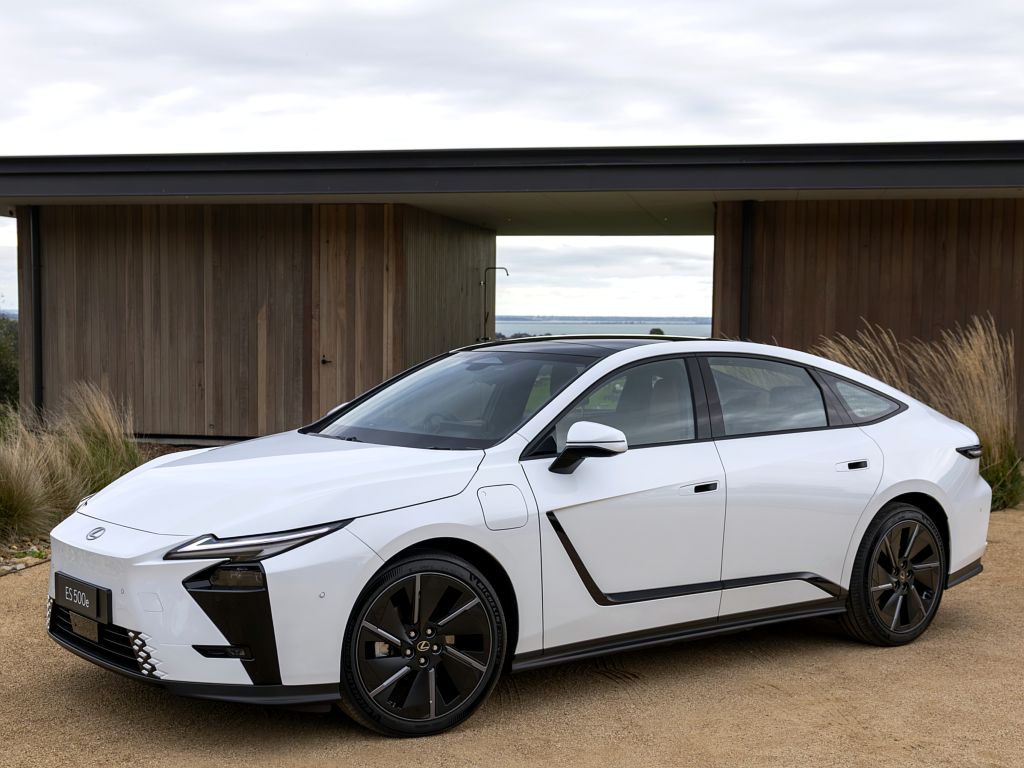

Connect with us


Facebook Twitter Instagram