

Make / Model Search
News - Ford - Ranger - EVEV tech not ready for Ford Ranger and EverestEV tech falls short of Ranger and Everest buyer requirements, say local Ford execs27 May 2026 FORD Australia does not believe it is currently ready for a battery electric model riding on the Ranger and Everest’s T6.2 platform according to local executives, effectively ruling out an EV version of either model for the foreseeable future.
Speaking with Australian media at the local launch of the updated Ford Everest and Ranger, vehicle program director Mario Brandini explained that the current Ranger is yet to reach the middle of its life – contrary to the traditional ten-year cycle of a ute – citing the recently-introduced Super Duty as an example of the platform’s continually expanding capability.
“Well I don't think we've reached mid-life yet. In terms of a product like this and the flexibility we've got on the platform, it's got a long life and like I said, it depends on how technology goes, you can keep playing with different models and things but the Ranger has got a lot still in it.”
“...People would think you never could do (the Super Duty). But now it can tow four and a half tonnes, it's got a payload of four and a half tonnes, you look at its off-road capability and where it can go. Things like that. So there's plenty of life left in this platform, definitely.”
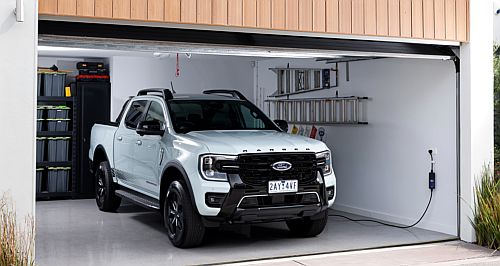
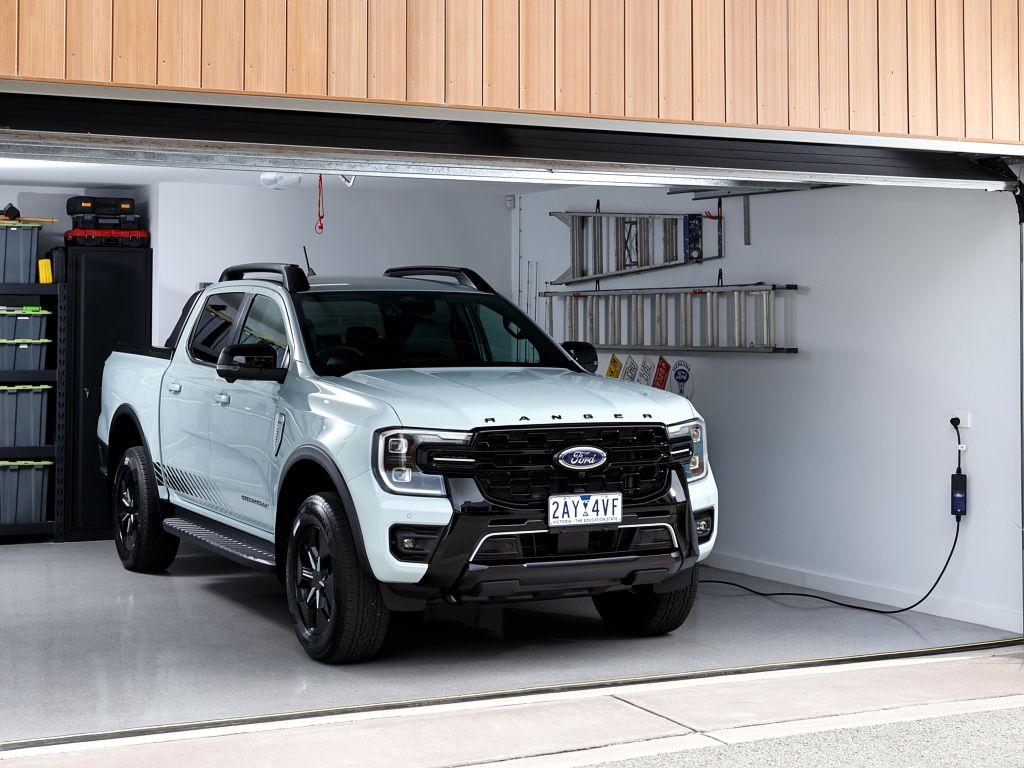
The Super Duty isn’t the only major recent addition to the Ranger’s powertrain line-up, with the plug-in hybrid variant landing in Australia in the middle of last year.
When asked if a full EV model riding on the T6.2 platform could be introduced if the customer demand existed for such a model, Mr Brandini explained that while it’s possible in the future, battery electric vehicles are currently unable to deliver when it comes to required capability.
“You could (bring a T6.2 EV to Australia) if the technology allowed it to deliver the capability that we’re looking for. At the moment, I would say that full EV, in terms of what this type of vehicle can do if you want to deliver the capability – just the laws of physics – you can’t get there. But that doesn’t mean you can't in the future.”
Ford Australia’s marketing director Ambrose Henderson added that Ford’s future plans are based on customer needs and wants, and that a BEV model does not currently align with these requirements.
“...when you think about what these customers do, and also the infrastructure that is available around Australia, it's not at a point yet where a full BEV is going to deliver for these customers,” he said.
“And that's why in the market, there's lots of headlines around the surge in EVs and that sort of thing. But when you look into it, the surge in EVs is coming from small and medium SUVs, where they don't require the capability because that's the level that EV technology is at today. It can deliver in that space.”
“But when you're towing 3.5 tonnes, it's not yet at that level, nor is there the infrastructure around Australia to be able to deliver that yet. So I think it's really important that we focus on what the customer needs, not just wants, but needs in the Australian environment and we're focused on delivering for that.”
While it seems that Ford will be without an electric Everest or Ranger in Australia – or a BEV ute in general in the case of the latter – for the foreseeable future, electric utes wearing the Blue Oval have made it to local shores before, albeit not in an official, factory-backed capacity.
In 2024, importer AusEV began selling right-hand-drive-converted examples of the Ford F-150 Lightning EV until its parent company, Bosscap, was placed into receivership in March of this year following the battery electric model’s discontinuation in the United States.
The battery electric ute space is expanding in Australia, particularly with the recent arrival of the KGM Musso EV and the BEV version of the Ranger’s arch rival, the Toyota HiLux. JAC also appears to be considering an Australian launch of its T9 EV for private and fleet buyers.
Currently, the four basic powertrain options are available for the Ford Ranger in Australia: a 2.0-litre single-turbo diesel four-cylinder (available in 2x4 and 4x4 configurations), a 3.0-litre turbo-diesel V6, a 2.3-litre four-cylinder petrol plug-in hybrid, and the twin-turbo 3.0-litre V6 petrol engine found in the high-performance Raptor model.
As for its Everest SUV sibling, buyers have the choice of a 2.0-litre single-turbo diesel four-cylinder (which replaced the outgoing “wet belt” bi-turbo engine choice) and the 3.0-litre turbo diesel V6.
Presently, the Mustang Mach-E SUV as well as the eTransit and eTransit Custom vans are the only battery electric vehicles in Ford’s Australian line-up.
 Read more7th of May 2026  JAC T9 EV a possibility says Aussie MDIncreased BEV interest could soon open the door for the electric JAC T9 in Australia31st of March 2026  Toyota prices HiLux BEV ahead of Q2 on saleElectric dual-cab Toyota HiLux asks $15.5K more than diesel equivalent, on sale later in Q226th of January 2026  AusEV Ford F-150 BEV is cheapest US pick-upDiscounted RHD F-150 Lightning Pro undercuts nearest petrol pick-up rivals by $496027th of November 2025  2026 Ford Ranger Super Duty ReviewWe drive Ford’s toughest Ranger yet, putting the Super Duty through its paces25th of November 2025  Full details revealed for Ford Everest, Ranger updateV6 power for more variants, Active entry model for Everest, more tech offered range-wide21st of November 2025  KGM prices Musso EV for AustraliaUp to 420km driving range from all-electric KGM Musso EV ute, priced from $60K d/a |
Click to shareFord articlesResearch Ford Ranger pricing
Motor industry news GoAutoNews is Australia’s number one automotive industry journal covering the latest news, future and new model releases, market trends, industry personnel movements, and international events. |



Connect with us


Facebook Twitter Instagram