

Make / Model Search
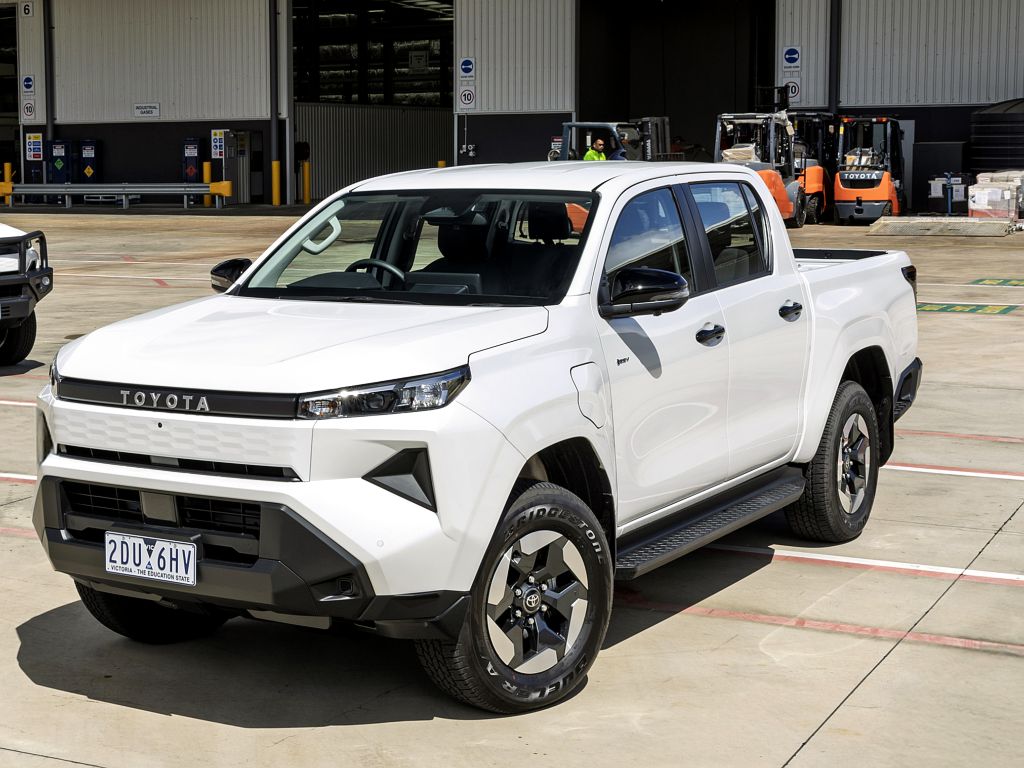
News - Toyota - Hilux - B E VHiLux to remain diesel, BEV as an alternative: ToyotaToyota’s new energy approach to HiLux unlikely to include hybrid or plug-in hybrid7 Apr 2026 By MATT BROGAN ALTHOUGH Toyota Australia revealed details of its first battery electric light commercial vehicle with the debut of the HiLux BEV in Melbourne last week, it has confirmed that hybrid and plug-in hybrid power are not on the agenda for its flagship utility, opting instead to jump from diesel directly to full electrification.
The HiLux BEV arrives to complement diesel and mild-hybrid diesel offerings within the ninth-generation HiLux range, a move that appears to defy current market trends as a growing number of competitors push various flavours of hybrid, plug-in hybrid and range extender utes.
Speaking with GoAuto at the HiLux BEV debut, Toyota Australia vice president of sales, marketing and franchise operations John Pappas said the approach to new energy drivetrains in the light commercial range is aimed at a specific audience while also helping to reduce the emissions average of its local portfolio.
“I’ve got nothing else to announce today on any other powertrains for HiLux moving forward,” he said, having reiterated that Toyota’s "multi-pathway approach to the reduction of CO2 emissions applies throughout our line-up".
"We have so many hybrids now that 50 per cent of our sales are hybrids. Of course, this means our customers have the luxury of choice throughout many of our vehicle lines,” emphasised Mr Pappas.
“The HiLux BEV is slightly different in that it’s targeted at a specific customer. It’s not a big volume proposition, initially. It is targeted more at a back-to-base type of customer.
“But I think it’s going to be great for us – and our customers – in that we can learn a lot from the experience and make the vehicle even better over time.”
Mr Pappas said a one-size-fits-all approach does not work when it comes to the HiLux, noting that Toyota Motor Corporation operates in about 190 markets, all with different requirements.
“We’ve been working closely with TMC in piloting this battery electric powertrain for 12 months, testing the vehicle in partnership with BHP,” he said.
“So, from a TMC point of view, the Australian market is considered pretty important, and although we can only access 500 examples of the vehicle in the first 12 months of production, we know that we will continue to build on that.”
While sales of the HiLux BEV are likely to grow over time, the arrival of other new energy technologies in the range – including hydrogen fuel cell (FCEV) power – means hybrid and plug-in hybrid buyers will need to look elsewhere, with Toyota seemingly investing in the long game rather than a short-term sugar hit.
“Hydrogen is a longer-term proposition … and the HiLux FCEV is on the way. But it’s largely dependent on hydrogen infrastructure, which is nowhere near ready yet. I honestly feel that’s about 10 years from being a viable option,” Mr Pappas told GoAuto.
“So again, the hydrogen HiLux, much like the HiLux BEV, will be targeted at a specific customer, to make sure we can bring the vehicle to market at scale when we’ve got more infrastructure.
“We feel that we’re in a good place so far as timing goes. We feel we are taking the right steps.”
Asked directly why Toyota had not considered HEV or PHEV power for the current-generation HiLux – one of the importer’s strongest sellers – Mr Pappas said customer utilisation and preference was at the heart of any decision, indicating that diesel and mild-hybrid diesel remained the right choice for now.
“Frankly, when you look at the HiLux, our demand is in diesel,” he said.
“We don’t want to leave anyone behind – we are all about customer centricity. We have to offer a vehicle that can fit people’s needs, and the HiLux has proven that it can do that for the customer it serves.
“As we go forward with HiLux, we will bring relevant technologies to the model at the right time to suit customer requirements.”
Mr Pappas said that was particularly important when applying the HiLux to a regional setting.
“Rural Australia is heartland Australia for us. We have been able to serve those communities for a long time, and that is something we want to make sure we can continue to do,” he said.
“For the majority of those customers, demand on that vehicle is very strong. So, we will continue offering that vehicle and extending on that with BEV and FCEV in time … But I can say that when those options become available for our market, we will assess them and make sure they can do the job for our market – and for our customers.”  Read more31st of March 2026  Toyota prices HiLux BEV ahead of Q2 on saleElectric dual-cab Toyota HiLux asks $15.5K more than diesel equivalent, on sale later in Q29th of December 2025  HiLux BEV ‘a start’ for electric light commercialsToyota Australia recognises limitations of electric HiLux, but says ‘we have to make a start’12th of November 2025  Just 240km range likely for new Toyota HiLux BEVSmall 59kWh battery for diesel-like payload impacts HiLux BEV’s driving range |
Click to shareToyota articlesResearch Toyota Hilux pricing
Motor industry news GoAutoNews is Australia’s number one automotive industry journal covering the latest news, future and new model releases, market trends, industry personnel movements, and international events. |



Connect with us


Facebook Twitter Instagram